Dominican Republic · La Romana
Teeth of the Dog, Casa de Campo
Pete Dye’s coral-edged Caribbean classic, freshly restored for its second half-century.
Golf in the Dominican Republic is concentrated on one stretch of the south-east coast, between La Romana and the Punta Cana airport. Three courses lead the way, and each was built by a different big name: Pete Dye’s Teeth of the Dog at Casa de Campo, from 1971 and reopened in March 2026 after a full rebuild, Jack Nicklaus’s Punta Espada at Cap Cana, and Tom Fazio’s Corales at Puntacana Resort & Club, home of the country’s PGA Tour event. All three put holes right on the coral shoreline, and all three are grassed in paspalum, which copes with salt spray. What separates them is who may book. Casa de Campo keeps its tee sheet for people staying on the resort, Corales favours members and its own hotel guests, and Punta Espada sells times to anyone. Settle that before you choose a hotel. Green fees are quoted in US dollars, although the local currency is the Dominican peso.
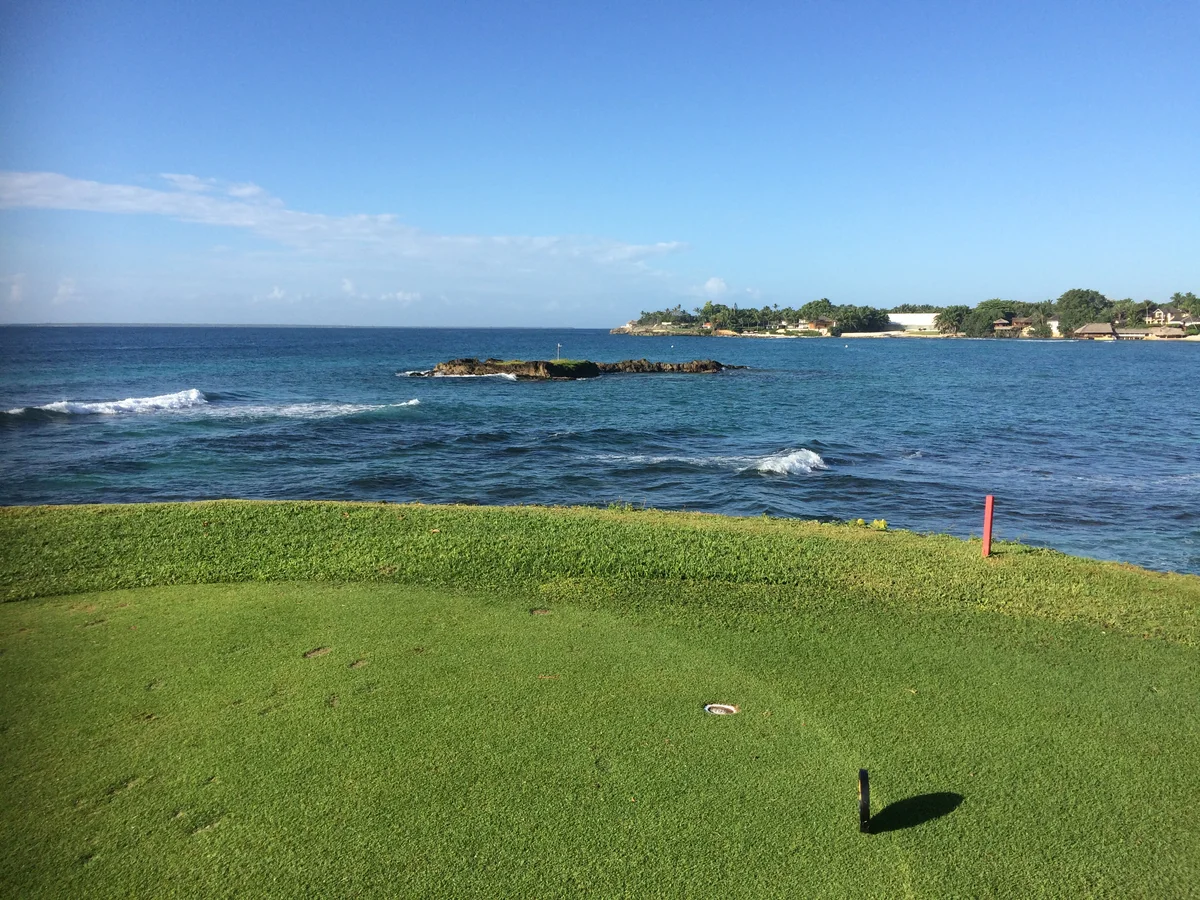
Pete Dye’s coral-edged Caribbean classic, freshly restored for its second half-century.
Nicklaus on the Cap Cana cliffs, with eight holes playing along or over the sea.
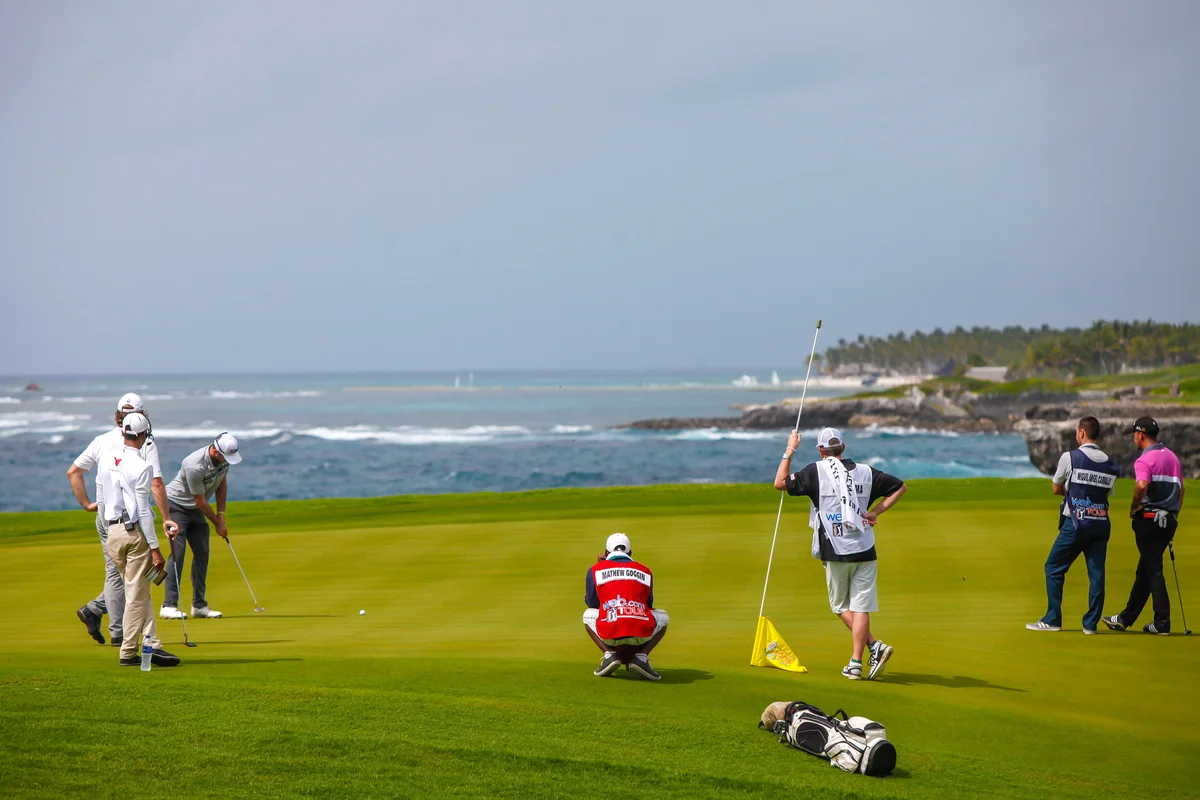
Destination imageryFazio’s PGA Tour course, ending with a three-hole fight around the cliffs of Corales Bay.
The only way onto Teeth of the Dog is a room or villa inside this 7,000-acre resort, and hotel guests pay less per round than villa renters. Dye Fore, with 27 holes above the Chavón River, and The Links are on the same estate. La Romana’s small airport is about ten minutes away, and Altos de Chavón supplies the evening restaurants.
Punta Espada’s estate lies a short drive south of Punta Cana airport, and Eden Roc, Sanctuary and the adults-only Secrets Cap Cana sit inside its gates. Staying here is a convenience rather than a condition, because the club books outside golfers from any hotel. Renting Villa Espada on the course unlocks the member-guest rate, and the marina has places to eat.
Choose Tortuga Bay, The Westin Puntacana or the cheaper Four Points inside the resort if Corales matters most. Golf plans for those hotels pair it with P.B. Dye’s 27-hole La Cana, and the golf desk also sells single à la carte times. The airport runway is next door, and Punta Espada is roughly 20 minutes away.
The large all-inclusive hotels north of the airport put you 30 to 45 minutes from Cap Cana. That is workable for golfers who want a beach holiday with a round or two on top, mainly because Punta Espada adds transport when you reserve on its own website. Corales is the other realistic option from here; Teeth of the Dog is not.
The dry, settled months run from December to April, and that is also the period of the highest demand and the steepest rates, so morning times at all three courses go first. May is still dry and quieter. From late spring into summer the heat and humidity rise and some rates ease. The Atlantic hurricane season covers June to November, with August to October the riskiest stretch and afternoon storms common. Two fixtures take tee times away. The Corales Puntacana Championship moved to July, and in 2027 it runs from 12 to 18 July, so do not count on resort play at Corales that week. Casa de Campo’s annual International Pro-Am squeezes Teeth of the Dog in its week too.
Fly into Punta Cana International (PUJ), which carries direct flights from much of North America and Europe and serves two of the three courses. Corales is beside the runway, with a private van transfer listed at US$20 for up to four people, and Cap Cana is about 20 minutes south. Casa de Campo is the outlier: around 75 to 90 minutes west by road from Punta Cana, and a similar drive east from Santo Domingo (SDQ). La Romana International (LRM) is about ten minutes from the resort but has far fewer routes. Traffic drives on the right. Most visitors rely on resort transfers or taxis rather than hiring a car, and inside Casa de Campo guests usually get around by golf cart.
Work out the order of the trip from the access rules. Book the Casa de Campo stay first if Teeth of the Dog is on the list, and reserve the tee time with the room, through the resort’s golf desk by phone or email. Punta Espada books online, by email or by phone with no residency condition, and its rate already holds the caddie fee, cart and ITBIS tax. Corales times come through Punta Cana Golf Packages, which quotes on request. Two of the three make a caddie mandatory, and Casa de Campo wants its caddie fee in cash, so carry US dollar notes for fees and tips. Cancellations inside 24 hours are charged in full at Casa de Campo and Punta Espada. Corales publishes no handicap limit, so ask when you book.
Casa de Campo is the only one with a published card: US$400 for hotel guests at Teeth of the Dog and US$550 for villa renters, plus 18% tax and the caddie. Punta Espada shows its seasonal price at booking, already including caddie fee, cart and tax. Corales was reported at US$395 to US$495 in 2024.
For Teeth of the Dog, yes: tee times go to Casa de Campo hotel and villa guests, owners, residents and the friends playing with them. Corales gives priority to members and Puntacana Resort hotel guests but sells à la carte times. Punta Espada is open to visitors from any hotel.
At Teeth of the Dog the compulsory caddie costs US$50 cash for one or two players sharing a cart, or US$100 for three or four, tip included; a walking caddie is US$100 a bag. Punta Espada folds its caddie fee into the rate and expects a separate tip. Corales does not publish a caddie policy.
Corales and Punta Espada, yes: they are about 20 minutes apart near Punta Cana airport. Teeth of the Dog needs a stay at Casa de Campo, around 90 minutes west, so a week covering all three normally splits into a Punta Cana base and a Casa de Campo base.
Punta Cana (PUJ) has the most flights and puts you minutes from Corales and Cap Cana. If the trip centres on Casa de Campo, check La Romana (LRM), about ten minutes from the resort; otherwise allow about 75 minutes by road from Punta Cana or Santo Domingo.
Last checked 11 November 2026. Independent planning guidance; confirm access, fees and travel details with each operator.
How we research our guides