Fly or ship your golf clubs to Australia and New Zealand?
Qantas and Air New Zealand golf bag rules, Luggage Forward prices and transit times to Sydney, NZ biosecurity declarations and King Island weight limits.
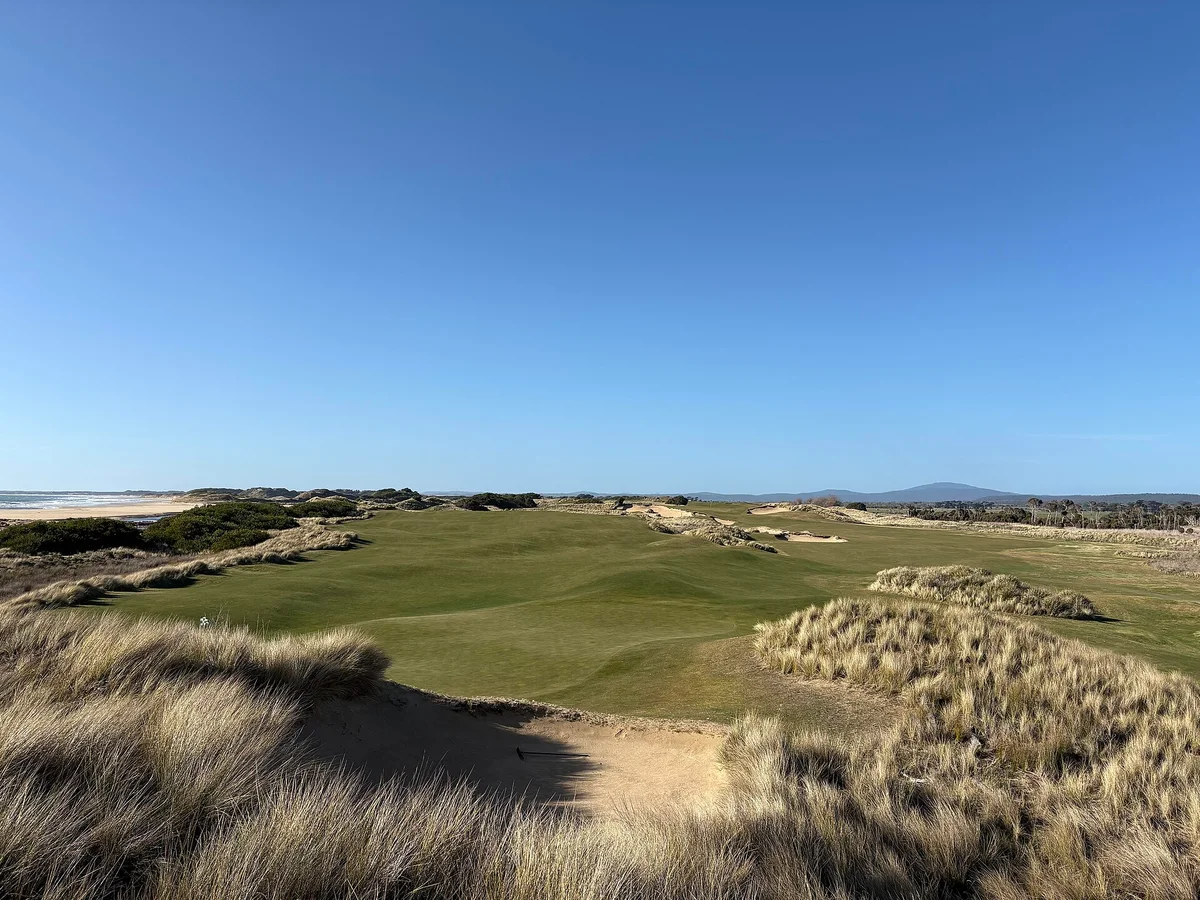
The short answer: fly with them, unless your trip ends on a small plane.
For most trips to Australia or New Zealand, your clubs can fly with you inside your normal checked allowance. Qantas includes checked baggage on every economy fare, and Air New Zealand on every fare except seat-only. Both count a golf bag as part of that allowance. How far it stretches depends on the route. Air New Zealand, and Qantas to and from the Americas, give you one piece, so the clubs take your only bag and the suitcase becomes an extra. Qantas’s other international economy allowance is set by weight, up to 30 kg, which a golf bag and a light suitcase can share. Shipping makes more sense in three cases. The first is a fare with no checked bag. The second is a route that ends on a small aircraft, such as King Island for Cape Wickham. The third is a tour with four or five changes of base between Melbourne, Tasmania, Hawke’s Bay and Queenstown. Whichever you choose, New Zealand expects you to declare golf clubs when you land.
Qantas and Air New Zealand: what a golf bag costs.
Qantas says sporting equipment can be included in your checked baggage allowance, and that each item checked in is one piece. On Qantas-operated flights, golf bags are exempt from the normal size limits, and no piece may weigh more than 32 kg. Its economy allowance is one 23 kg piece within Australia, one 32 kg piece to and from North and South America, and 30 kg on other routes. Air New Zealand counts a golf bag holding clubs and one pair of shoes as a standard bag if it is under 2 m long and weighs up to 23 kg. Its international economy fares include one 23 kg bag, and economy from Australia to the USA, except New York, includes two. Seat-only fares carry hand luggage only. Leaving New Zealand for anywhere beyond Australia and the Pacific Islands, an extra bag costs NZ$195 and a bag of 23 to 32 kg costs NZ$120. Across the Tasman the figures are NZ$115 and NZ$80 from New Zealand, or A$105 and A$80 from Australia. Within New Zealand they are NZ$60 and NZ$40.
Luggage Forward: prices, transit times and lead time.
Luggage Forward lists golf bags from US$129 for a small bag (up to 18 kg, 127 × 30 × 25 cm) and from US$149 for a large one (up to 22 kg, 132 × 38 × 30 cm). It says overseas rates vary by destination, so a Pacific trip needs its own quote. Its Australia page says golf clubs are priced by bag category, the same way as luggage, with no airline-style oversize fee. As a guide, it quotes US$494 for a standard bag of up to 50 lb from New York to Sydney, with standard delivery booked about ten days ahead. That delivery takes about eight business days, and the company says its transit times already allow for routine customs inspections. Preferred service arrives two to three days sooner for an extra fee. Duties and import taxes, where they apply, are billed separately. If a bag goes over its booked category, the price moves up to the next one. You can book up to 180 days before pickup, and the bag is collected from your home, office or hotel.
Biosecurity and customs: declare your clubs, and clean them first.
New Zealand Customs lists golf clubs, along with camping gear and used bicycles, among the equipment travellers must declare to the Ministry for Primary Industries. If you fill in the biosecurity section incorrectly, you risk an instant NZ$400 fine. Australia runs its own biosecurity screening, and the Department of Agriculture publishes its current advice to travellers on agriculture.gov.au. Read it before you pack, as the rules for used outdoor gear can change. The same preparation suits both countries. Scrub the grooves on every clubhead, wash the soles of your golf shoes and empty the bag’s pockets of old tees and loose grass. Shipped clubs pass through customs too. For bags going to Australia, Luggage Forward asks for a complete list of what is in each one and says they must travel unlocked so customs can inspect them. Zip ties or other removable fasteners are acceptable. Whichever way the clubs travel, pad the heads and use a hard or well-padded travel case.
Tasmania and King Island: where the small planes start.
Barnbougle is the easy part of Tasmania. You fly to Launceston from Melbourne, Sydney or Brisbane, then drive about an hour and a quarter to Bridport. King Island is different. Sharp Airlines flies there from Melbourne’s Essendon Airport, Launceston and Burnie, with 15 kg of checked luggage and 6 kg of carry-on, 21 kg in all. Golf clubs count inside that 21 kg. Each extra kilo costs A$6.22 or A$7.05, depending on the route, and extra baggage cannot be bought in advance. It also travels only if there is space on the day. A 14 kg travel bag and an 8 kg suitcase already put you over the limit. Sharp’s aircraft have no overhead lockers, so carry-on must fit under the seat, and no single item may weigh more than 30 kg. With hire clubs at Cape Wickham costing A$55 a day, many golfers leave their own set in Melbourne for the island leg.
New Zealand: regional flights, Queenstown and the lodges.
New Zealand is easier for golf bags than its geography suggests. Jack’s Point is about ten minutes from Queenstown Airport. Cape Kidnappers is reached through Napier, which has direct flights from Auckland, Wellington and Christchurch. Kauri Cliffs is about 40 minutes by road from Bay of Islands Airport at Kerikeri. On Air New Zealand’s regional services within New Zealand, the largest item accepted is 1.8 m long, 0.8 m wide and 1.2 m high. Luggage Forward’s large golf bag size, 132 × 38 × 30 cm, sits well inside that, and the 23 kg standard-bag limit still applies. The bigger risk is a domestic seat-only fare, which includes no checked bag. The NZ$60 extra-bag charge is easy to miss when you book three internal flights separately. If you fly into Auckland and drive north to Kauri Cliffs or Te Arai, the bag stays in the car. A week that combines Hawke’s Bay, Queenstown and Northland means several flights, and that is the itinerary where shipping between bases is worth pricing.
Renting instead, and a checklist.
Several of the region’s best-known courses rent good sets. Barnbougle charges A$40 for standard hire, or A$60 for an executive Callaway set with a pull cart. Cape Wickham charges A$55 a day, and Te Arai Links charges NZ$95 a round for a rental set. Cape Kidnappers offers club and shoe hire but does not list a price. Ask for the set when you book the tee time, and say whether you need men’s or ladies’, right- or left-handed. Before you leave, run through five checks. Does every flight, including internal ones, carry your golf bag inside the allowance? Is the bag under 23 kg for Air New Zealand, and does your whole checked load fit the Qantas allowance for your route? Are the clubheads and shoe soles free of soil, and will you declare the clubs when you land in New Zealand? Do you know the combined 21 kg limit for the King Island flight? If you are shipping, have you booked early enough for about eight business days of transit to Sydney?
Get a quote for your route.
Enter your home address and the course or lodge in Australia or New Zealand, from Barnbougle to Cape Kidnappers, for a Pacific rate and the pickup date you would need.
Get a shipping quoteSponsored link: we may earn a commission at no extra cost to you. How we work