Japan · Seagaia
Phoenix Country Club
The Dunlop Phoenix course, threaded through a 200-year-old black pine forest on Kyushu’s coast.
Destination imageryC.H. Alison’s 1936 clifftop course above Sagami Bay, played from a room at the hotel.
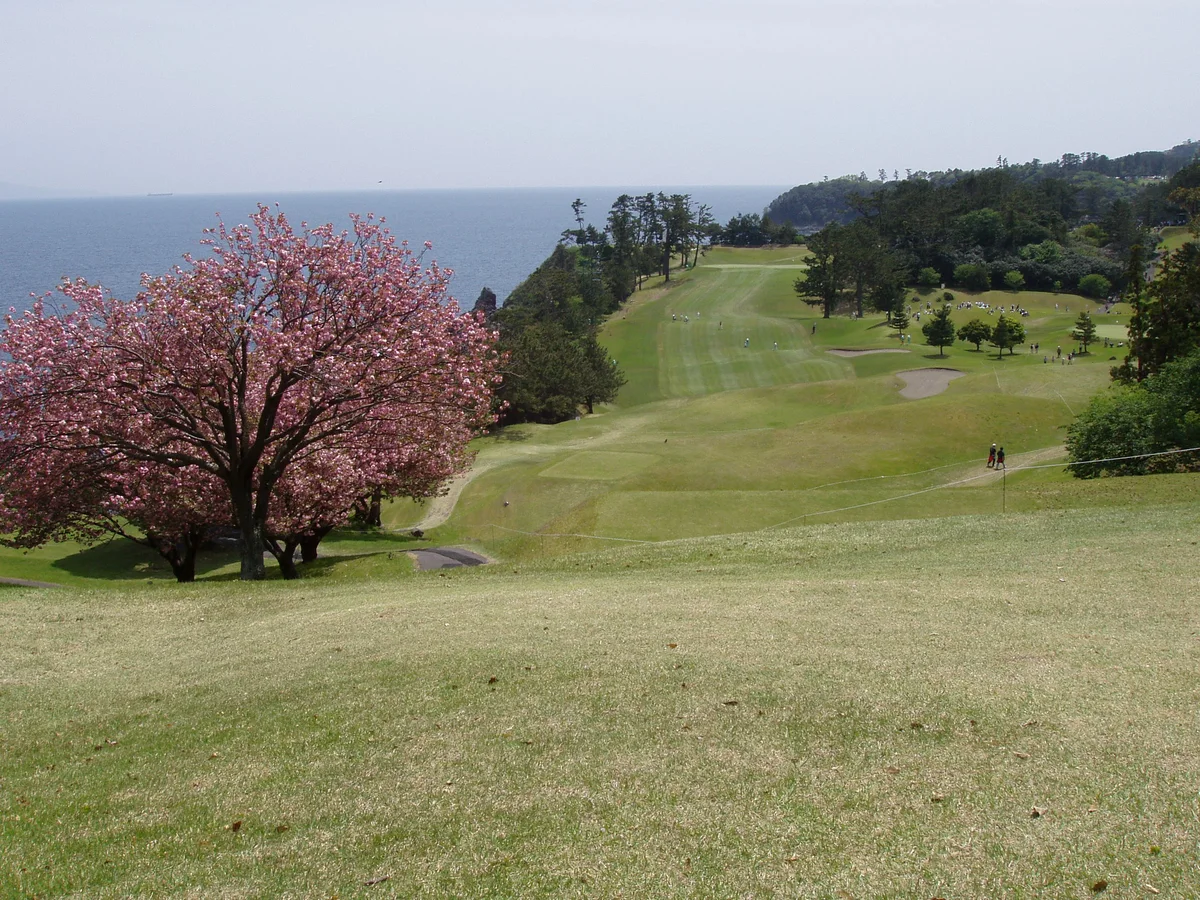
The Fuji Course at the Kawana Hotel sits on a headland on the east coast of the Izu Peninsula, looking out across Sagami Bay towards the island of Izu Ōshima. It opened with the hotel in 1936, and the hotel describes it as a course often called the hardest in the East. For an overseas visitor the important fact is simple: you cannot play the Fuji Course as a day visitor. It is reserved for golfers staying at the hotel, so your booking is a night at Kawana, and the round follows from it.
Book the hotel first and the tee time with it. The Fuji Course does not take same-day bookings because every round is tied to an overnight stay; the sister Oshima Course is the one that accepts day visitors. The course page links to an online availability calendar for each course, and SEIBU PRINCE CLUB, the group’s free loyalty programme, adds member golf benefits. You can also phone the hotel’s reservations line on 0557-45-1111 or the course on 0557-45-5269. Japanese stay-and-play plans appear on booking sites such as Golf Jalan, and they show what is included: a night’s room, breakfast and a round with a caddie, with lunch extra. Smaller groups pay more per head: on the Fuji Course the hotel’s FAQ lists ¥1,705 per person for a three-ball, ¥5,115 for a two-ball and ¥15,345 for a single. No handicap rule is published.
Per person, as listed by Golf Jalan for 11 February 2027: one night in a 30m² seaside twin (two sharing), breakfast and 18 holes on the Fuji Course with a caddie, including golf course tax. Lunch and hot-spring tax extra; plan prices vary by date.
| 3-ball surcharge on this plan, per person | ¥1,969 |
|---|---|
| 2-ball surcharge on this plan, per person | ¥5,907 |
Kawana was the idea of Kishichiro Okura, second head of the Okura business family, who bought the land after recovering from illness in nearby Itō. The volcanic-ash soil defeated his plan for a pasture, so he turned to golf. A course was part-built by Rokuro Akaboshi when the British architect C.H. Alison was brought in to advise, and his advice led to a full redesign. From the black tees it is a par 72 of 6,701 yards; from the blue tees it is 6,242. Alison used the natural fall of the headland, and his deep “Alison bunkers” are still the course’s main defence: five of them guard the 10th alone. Its named holes are the par-five 3rd, 11th and 15th, the par-four 7th and the par-three 16th. The 15th is where, the hotel recalls, Jumbo Ozaki once hit three balls out of bounds in a row during a tournament. In 1962 the course staged the Eisenhower Trophy, the world amateur team championship, won by the United States.
Plan two nights rather than one. Arriving the afternoon before lets you play the Fuji Course in the morning without a dawn start from Tokyo, and the second day can go to the Oshima Course or the Izu coast. Rental sets are available in several brands and sizes, but numbers are limited, so reserve them with the room if you fly without clubs. Bring a jacket for arrival at the clubhouse, which the hotel recommends, and remember that mock necks are accepted but T-shirts are not. The golf course tax is waived for players aged 70 and over and under 18 if you apply at the front desk in advance.
Fly into Tokyo Haneda (HND) or Narita (NRT). From Tokyo, the Tokaido Shinkansen reaches Atami, and the JR Itō Line runs on to Itō. The Itō Line takes about 25 minutes from Atami, and the hotel is about 15 minutes by taxi from Itō Station. A free hotel shuttle leaves Itō Station at 11:00, 13:00 and 15:10; it must be reserved and does not wait for late trains. Taxis at the small Kawana Station are few and cannot be booked, so the hotel advises starting from Itō.
There is only one way to stay and play the Fuji Course: the Kawana Hotel itself, a Prince-group hotel opened alongside the course in 1936 on Okura’s estate. Plans sold on Japanese booking sites typically use non-smoking seaside twin rooms of about 30 square metres, with check-in from 15:00. Itō, 15 minutes away, is an established hot-spring town with ryokan and business hotels, useful for anyone in your party who does not need to be on site, though only hotel guests can book the Fuji Course.
The Oshima Course shares the clubhouse and is the older of the two, opened in 1928 to a design by Mitsuaki Otani, whom the hotel calls the father of Japanese golf. Its 6th crosses a deep valley by suspension bridge and carries the nickname “S.O.S.”, chosen with input from the future prime minister Ichiro Hatoyama. Oshima is played in self-drive navigation carts and takes day visitors. Away from golf, non-golfers in your party can join the hotel’s Ohanami Cruise, a guided blossom tour of both courses run from 1 February to 11 April 2027 (¥7,700 for hotel guests, ¥9,900 for others, booked by 17:00 the day before), and the volcanic Jōgasaki coast lies a short drive south.
Both courses open all year, with occasional maintenance and tournament closures. Cherry trees stand beside several fairways, and the hotel runs its blossom tour from February to mid-April. June and early July fall in Japan’s rainy season, so spring and late autumn are the safer windows. The Fuji Course staged the Fujisankei Classic from 1981 to 2004 and the JLPGA’s Fujisankei Ladies Classic from 2005 to 2024; the ladies’ event was cancelled in 2025 and has since been discontinued. In June 2026 it hosted the JLPGA Legends Championship.
Explore golf by monthNo. The hotel’s own FAQ says the Fuji Course cannot be played without an overnight stay, and same-day bookings are refused. Day visitors can play the Oshima Course, Mitsuaki Otani’s 1928 layout on the same headland, which takes walk-up bookings when tee times are free.
The hotel does not publish a standalone Fuji green fee. Stay-and-play plans give the clearest figure: Golf Jalan lists ¥75,385 per person for a February 2027 date, covering a shared seaside twin, breakfast and a caddie round. Single golfers pay a ¥15,345 surcharge on the hotel’s own scale.
Take the Tokaido Shinkansen to Atami and change to the JR Itō Line for Itō, then use the hotel’s shuttle, which must be reserved, or a 15-minute taxi. The shuttle runs three times a day and fills up, so book it when you book the room.
Charles Hugh Alison, the British architect the Okura family brought in during the 1930s. He was asked to advise on a routing Rokuro Akaboshi had partly built and ended up redesigning it; the course opened in 1936. In October 1962 it hosted the Eisenhower Trophy, when 23 four-man teams competed and the United States won.
Last checked 11 November 2026. This is an independent planning guide, not a first-hand review or a booking service. Check live availability, access, fees and travel details with the operator before booking. Airport suggestions are starting points for route planning.
How we research our guidesPhoto credits and licencesThe Dunlop Phoenix course, threaded through a 200-year-old black pine forest on Kyushu’s coast.
Destination imageryA waterfront golf escape with Abu Dhabi on the doorstep.
Destination imageryThe Desert Classic’s home since 1989, plus a floodlit Faldo for evening rounds.
Destination imagery