Shipping golf clubs to Japan: fly, ship or send by takkyubin?
Delta’s golf-bag rules, Yamato’s takkyubin from Narita or Haneda to the course, Luggage Forward to Japan, customs, and the Shinkansen oversized bag rule.
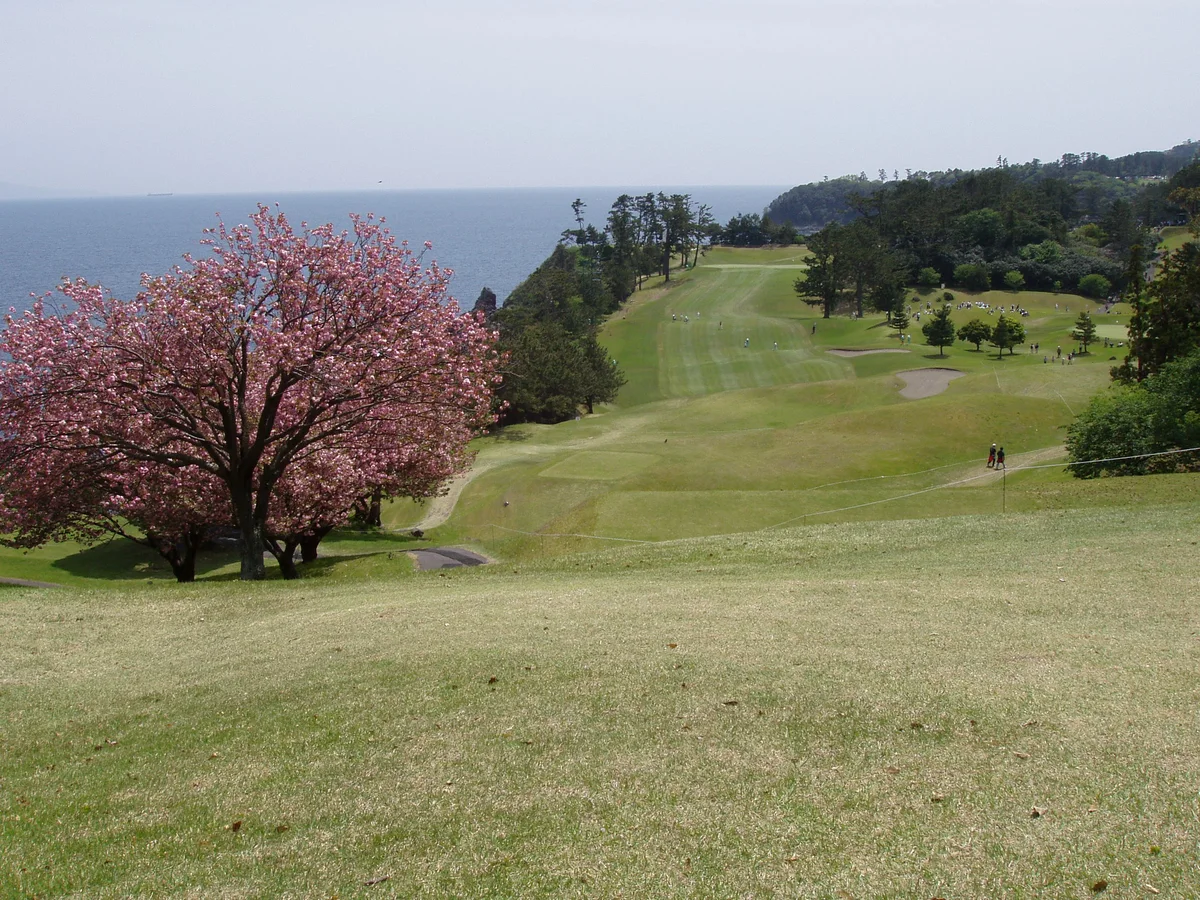
The short answer: fly them in, then hand them to takkyubin.
For most golfers the cheapest plan for Japan has two parts. Fly the clubs in as a checked bag, then hand them to a Japanese delivery company at the airport and collect them at the course. Whether the flight leg costs anything depends on your ticket. Delta, for one, counts a golf bag as one of your standard checked bags rather than a special item, so on a fare that already includes a bag the clubs fly at no extra cost, as long as the packed case stays within 50 lb. Yamato’s golf delivery service then charges each bag at its 160-size rate: ¥3,020 in cash from the Tokyo area to Shizuoka, where the Kawana Hotel sits, and ¥3,630 to Kyushu, home of Phoenix Country Club. Shipping door to door from the US with Luggage Forward costs more and takes about eight business days, so it earns its place on fares without a free bag, or when you would rather not handle the clubs at all.
Delta, JAL and ANA: what the golf bag costs in the air.
Delta sets out its golf rules in detail. One checked golf bag counts as a standard checked bag and may hold one set of clubs, golf balls and tees, and one pair of golf shoes. The usual fees and allowances for your cabin and travel region apply, so a golf bag beyond your allowance costs extra. Anything over 50 lb pays Delta’s excess weight fee, and a bag whose length, width and height add up to more than 115 inches, or 292 cm, is refused. The clubs must travel in a hard-shell case, or in a soft-sided golf travel bag once you have signed a limited release, and Delta is not responsible for damage noted at check-in or caused by over-packing. On JAL and ANA, Japan’s two main carriers, the allowance varies with cabin, route and fare type. Read the allowance printed on your e-ticket, and ask the airline how it counts and weighs a golf bag before you pack, rather than relying on another passenger’s fare.
Golf takkyubin: Japan’s own way to move clubs.
Japanese golfers rarely carry clubs to the course. They send them ahead with takkyubin, the national parcel network, and Yamato Transport runs a dedicated golf service. Hand the bag over by the cutoff two days before you play, or three in some areas, and it reaches the course the day before your round; you collect it at the front desk on the day, showing the shipper’s copy of the waybill. Each bag may weigh up to 30 kg, and Yamato’s liability is capped at ¥300,000 a piece. A protective cover is required: a simple golf cover costs ¥700 and a padded golf travel cover ¥5,070. A full or half set pays the same 160-size rate, and Yamato’s cheaper same-prefecture rate does not apply to golf bags; from the Kanto region the cash rate is ¥3,020 to anywhere in Kanto or Chubu. Book the return at the same time and you leave the course empty-handed, with the return leg valid for a month. Course deliveries cannot use time slots or cash on delivery.
Narita, Haneda and Kansai: where to drop the bag.
Both Tokyo airports have delivery counters in the public area, before security. At Narita, Yamato has counters on the first floor of Terminal 1’s North and South Wings, Terminal 2 and Terminal 3, open from 06:30 to 22:30 and later if the last flight lands after 22:30; JAL ABC and Sagawa Express also have first-floor counters in Terminals 1 and 2, open until an hour after the last international arrival. The fourth-floor counters in Terminal 1, open 07:00 to 21:00, take bags on the way home. At Haneda’s Terminal 3, the international terminal, JAL ABC’s delivery counter in the second-floor arrival lobby opens from 4:00 to 1:00 the next morning, and Yamato’s from 5:00 to 23:00; JAL ABC’s counter for receiving bags, in the third-floor departure lobby, is open around the clock. The timing matters more than the counter. Because course delivery needs two days’ notice, a bag handed in on the day you land suits a first round two days later. If you want to play the morning after arrival, keep the clubs with you that first night.
Luggage Forward to Japan: timing, price and paperwork.
Luggage Forward ships golf clubs to Japan door to door, delivering to hotels, ryokan and homes anywhere in the country. Standard delivery from the US takes eight business days, and Preferred takes six, both under its double-money-back on-time guarantee. It also collects from golf courses, so the bag can start its journey home after your last round. Its international page quotes New York to Tokyo, standard service with a ten-day advance pickup, from US$209 for a 25 lb bag, US$389 for 50 lb and US$549 for 75 lb, as pulled in May 2026; golf bags are priced by weight and size category, so get a quote for yours. The company prepares the customs paperwork from your passport, invoice, travel details and a non-resale declaration. Used sporting equipment ships without duties or taxes, but new or price-tagged items may be charged. Leave the bag unlocked. Lithium batteries, including rangefinders and trackers, are barred, as are sunscreen, food and medication. Its Japan page names hotels rather than golf courses as destinations, so ship to the hotel, such as the Kawana Hotel.
Customs: what Japan asks of arriving golfers.
Clubs you carry yourself are personal effects. Japan Customs lets in clothes, toiletries and other items for your own use free of duty and tax, as long as the quantity is appropriate and nothing is for sale, so a used set you carry yourself pays nothing. Japan Customs recommends making your declaration electronically through Visit Japan Web, though paper forms are still available on the plane and at the airport. Shipping changes the picture slightly. For unaccompanied baggage, meaning goods sent separately from you, Japan Customs asks you to hand in two copies of a written declaration when you arrive; it stamps one and returns it, and you need that copy for the shipment to clear duty-free. The goods must reach you within six months of arrival. If you ship with Luggage Forward, ask whether your booking needs that arrival declaration as well as the paperwork the company files. New balls or gloves still in their packaging may attract duty in a shipped bag.
Trains, the two courses on this site, and renting.
Rail with clubs is possible but fiddly. On the Tokaido, Sanyo, Kyushu and Nishi-Kyushu Shinkansen, a bag whose three sides total 161 to 250 cm needs a reserved seat with an oversized baggage area, at no charge beyond an ordinary reserved seat; bring one on without that booking and you pay ¥1,000, and anything over 250 cm is refused. Measure your travel case first, because up to 160 cm needs no booking. For Kawana, the hotel accepts takkyubin addressed to the golf course at 1459 Kawana, Itō, marked with your play date, and its courier counter sends bags out through Yamato after the round, with the last pickup at 16:30. At Seagaia, the resort encourages round-trip bag service and lets you arrive at Phoenix Country Club and leave from the Tom Watson course. Renting is the lightest option of all. Kawana keeps sets in several brands and sizes in limited numbers, so reserve one, and Golf Jalan lists Phoenix rentals from ¥5,000.
A checklist before you fly to Japan.
Run through five questions. Does every flight on your ticket include a checked bag, both ways, including any domestic connection to Miyazaki or elsewhere? Will the packed case stay within your airline’s weight limit, 50 lb on Delta, and do you know the overweight charge if it does not? Is your first round at least two days after landing, so a takkyubin bag can reach the course? Will you take the Shinkansen with the clubs, and if so have you reserved a seat with the oversized baggage area? And do you need the clubs at all, or will a rental set do for one or two rounds? An included bag and a gap of two days point to flying with the clubs and sending them on with Yamato from the arrivals hall. A fare without a free bag, a tight first tee time or a dislike of airport queues points to a Luggage Forward quote, delivered to your hotel.
Get a quote for your route.
Enter your home address and your hotel or ryokan in Japan, from Tokyo to the Kawana Hotel or Seagaia, to see the price and the eight-day standard transit before you book.
Get a shipping quoteSponsored link: we may earn a commission at no extra cost to you. How we work