Australia · Bridport
Barnbougle
Tasmanian dunes, a big sky, and the freedom to play the ground game.
Soutar’s tight routing and MacKenzie’s 15th on 127 acres of Cheltenham sand.
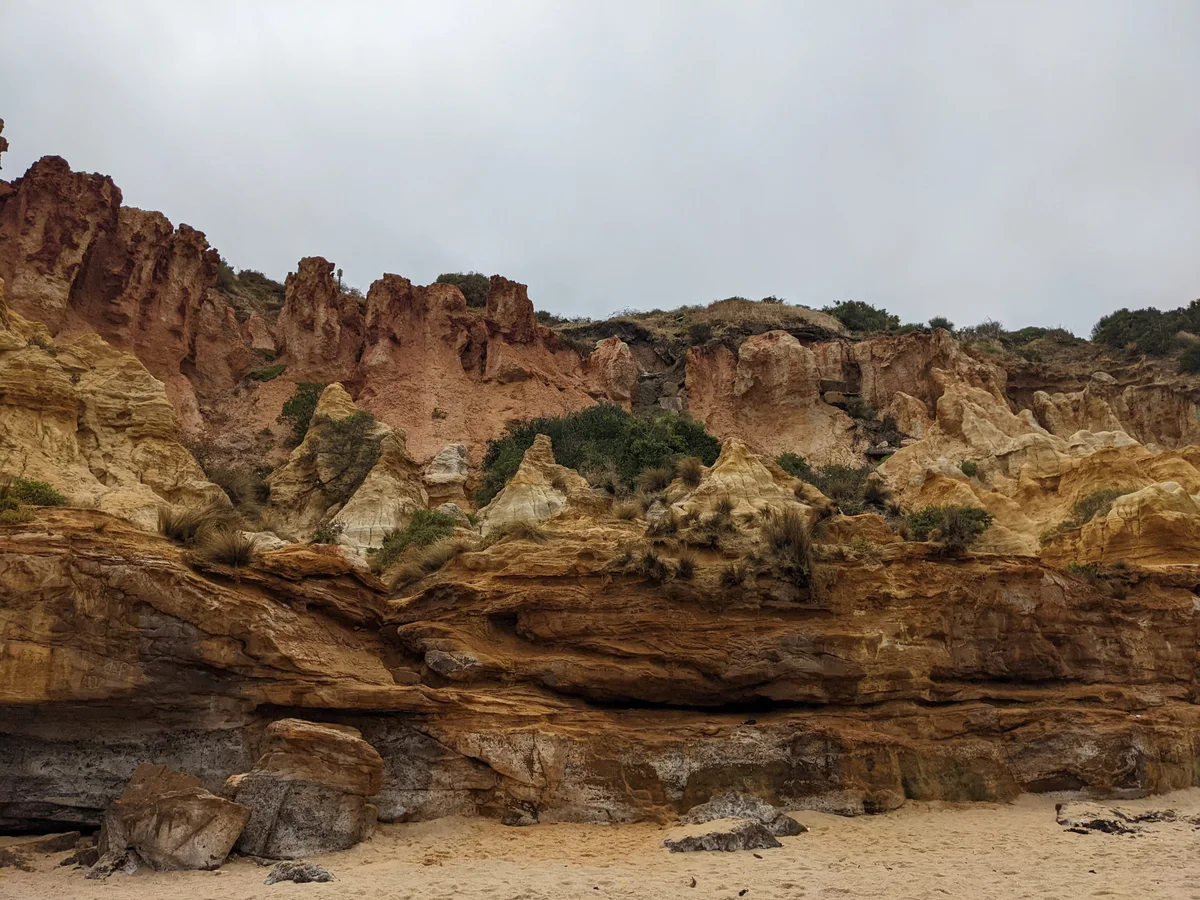
Kingston Heath sits on 127 acres of former market gardens in Cheltenham, in Melbourne’s south-eastern suburbs, and it packs a full championship course onto a block most clubs would call too small. The routing is tight and clever, the bunkering is some of the most photographed in Australia, and the club has hosted nine men’s Australian Opens. It is a private members’ club, but it takes requests from international and interstate golfers who belong to a recognised club. With the Presidents Cup coming in 2028, now is a sensible time to go.
Start at the club’s booking site, play.kingstonheath.melbourne, and submit a tee-time request. Visitors must belong to a recognised golf club, and that membership is checked during booking. To confirm the time, the club needs a letter of introduction from your home club that lists every player by name or Golf Link number, and full payment of the green fee. The green fee is not published, so it is quoted when the club responds to your request. Cancel at least two weeks out and you get a refund less a 10% fee; inside two weeks the refund is 50%, and nothing is refunded on the day unless staff close the course. Caddies are limited, so ask for one when you request the time. Questions go to the club on +61 3 8558 2700 or golf@kingstonheath.melbourne.
The Elsternwick Golf Club bought six Cheltenham market gardens in the early 1920s and hired Dan Soutar, a Carnoustie man, to lay out the new course. Soutar is said to have started from a stand of gum trees near the centre of the block, which he called a ready-made short hole for the 10th. Mick Morcom, lent by Royal Melbourne, built it with his son Vernon. Soutar’s design measured 6,812 yards, then the longest in the country, and the course opened on 4 April 1925 with no bunkers at all. Alister MacKenzie supplied a bunkering plan in 1926 and made one significant change: he moved the 15th green onto the ridge that crossed the old par-four fairway, creating the par three that is now the signature hole. Vern Morcom had built 53 of MacKenzie’s sprawling bunkers by 1928, then broke them into more than 130 smaller ones by 1945, the pattern you see today. From the 1970s superintendent Graeme Grant spent 16 years clearing hundreds of trees and rebuilding greens, restoring the firm, fast ground.
Bring Australian dollars in cash for the caddie and the tip: the rest of the club is card-only, including the golf shop and the bar. If you fly without clubs, book a premium hire set at A$90 and give your hand and shaft flex in advance. Golf carts (A$60) and electric walking buggies (A$20) are few and must be pre-booked; carts need a doctor’s certificate. The club expects a round in four hours or less, and staff may ask a slow group to skip a hole. Phone calls are allowed only in the locker room or car park.
Melbourne Airport (MEL) at Tullamarine is on the far side of the city, so allow about an hour by car or taxi, more at peak times. The club is on Kingston Road, Cheltenham, close to Moorabbin Airport and the Westfield Southland centre. Cheltenham and Southland stations on the Frankston line are a short taxi ride away if you are staying in the city.
Nearby: 1. The Royal Melbourne Golf Club (5 km) · 2. Peninsula Kingswood Country Golf Club (20 km) · 3. Moonah Links (Legends Course) (54 km) · 4. The National Golf Club (58 km) · 5. RACV Cape Schanck Resort (59 km) · Compare all Melbourne Sandbelt & Mornington Peninsula tee times
Most visitors stay in the city or by the bay. St Kilda and South Melbourne put you about 30 minutes from the first tee with plenty of restaurants, while Brighton and Sandringham are closer and quieter. A base in Black Rock or Beaumaris keeps Kingston Heath, Royal Melbourne and Victoria Golf Club within a short drive of one another, which suits a three- or four-day sandbelt trip.
Royal Melbourne is about ten minutes west, and Victoria Golf Club, which shared the 2022 and 2024 Australian Opens with Kingston Heath, is close to it. Metropolitan, Huntingdale and Commonwealth sit a short drive north. For public golf, Sandringham, rebuilt by Ogilvy Cocking Mead as the Australian Golf Centre, has a floodlit range. Off the course, walk the Red Bluff cliffs at Black Rock or swim at Half Moon Bay.
Spring, from October to November, is when the heathland flowers around holes such as the par-three 5th, and summer brings the firmest running fairways. The club’s own hole notes name two winds to plan for: the hot northerly of summer and the cooler southerly buster. The club also sells an Australian Open Experience, a round on the tournament layout in the days after the Open, with lunch and drinks: the 2026 date is Tuesday 8 December at A$1,500 per player. The Presidents Cup comes here in 2028, so expect restricted access around that event.
Explore golf by monthYes, if you live outside Victoria and belong to a recognised golf club. International and interstate golfers request times through the club’s booking site, the club verifies membership, and a home-club letter naming every player is needed to confirm.
The club does not publish a visitor green fee online. It is quoted when your request is accepted and must be paid in full to confirm the tee time. Caddie fees, A$220 for a single caddie and A$270 for a forecaddie, are paid separately in cash.
Only with a medical certificate. Kingston Heath is a walking course; the handful of carts (A$60) and electric buggies (A$20) must be booked in advance, and a cart request needs a copy of the certificate.
The par-three 15th. Alister MacKenzie moved the green onto the ridge that crossed the old par-four fairway, at the highest point of the course, in his 1926 report. It was the only significant change he made to Dan Soutar’s routing.
Last checked 11 November 2026. This is an independent planning guide, not a first-hand review or a booking service. Check live availability, access, fees and travel details with the operator before booking. Airport suggestions are starting points for route planning.
How we research our guidesPhoto credits and licencesTasmanian dunes, a big sky, and the freedom to play the ground game.
Jones, Norman and Doak in one set of dunes, by visitor request.
Destination imageryAn ocean view from every hole, under Australia’s tallest lighthouse.
Destination imagery